In this article
The end-of-day version most people know
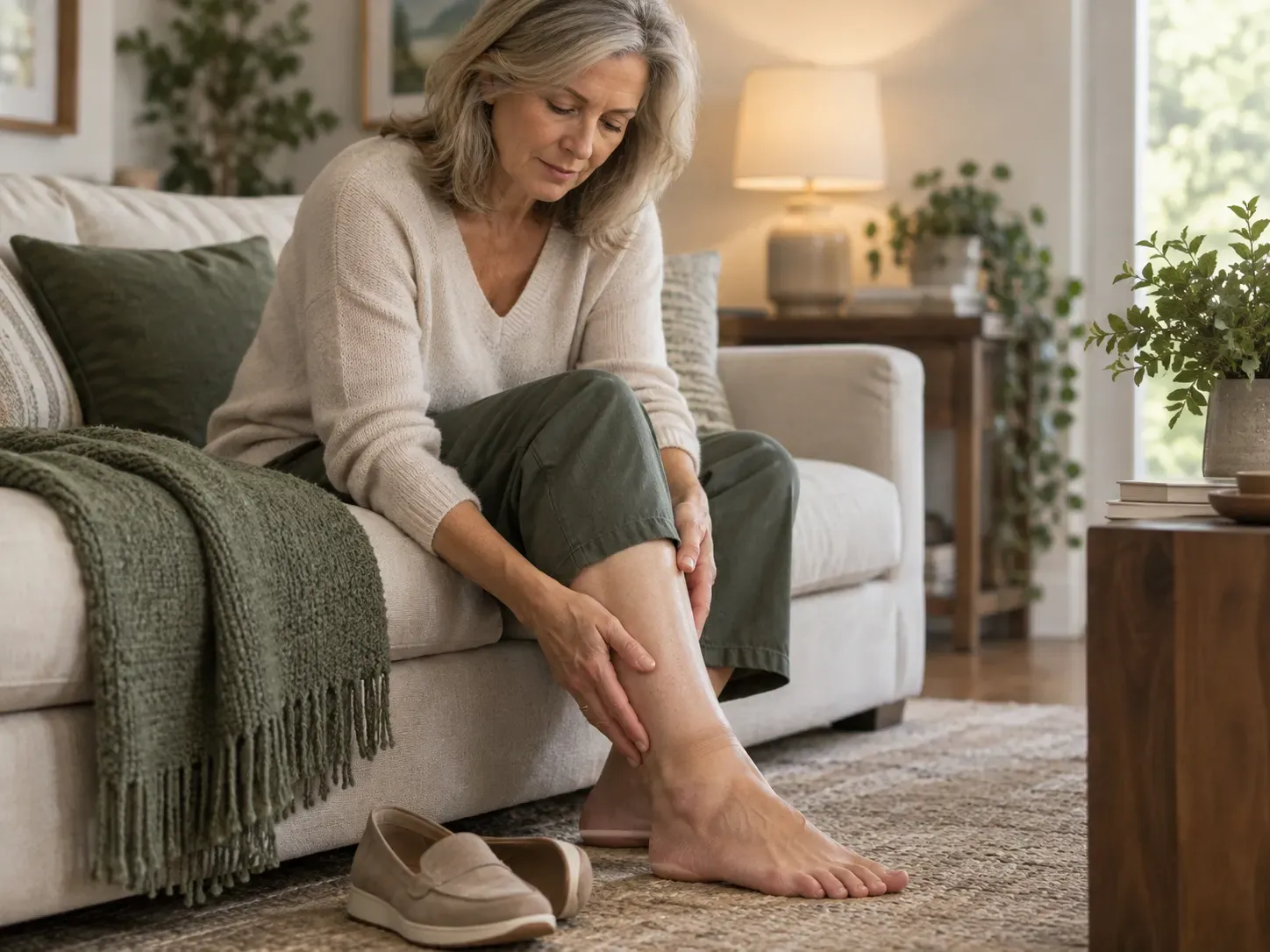
Socks leave a mark they didn’t used to. Shoes feel tighter by evening than they did that morning. Press a finger into the front of the shin and a small dent stays for a second before it fills back in. Most people quietly file this under “just getting older” and move on. Often, that’s close enough to true. But “usually true” and “always true” aren’t the same claim, and the difference is worth actually knowing rather than guessing at.
What’s happening, mechanically
Here’s the mechanical part, in plain terms: edema, the clinical word for this kind of swelling, means fluid building up in the body’s tissues — most often in the feet, ankles, and legs. The everyday version is usually gravity and time: fluid pools in the lower legs after a long day of sitting or standing in one position, because nothing has been actively working to move it back up. That’s a real, mechanical explanation, not a euphemism.
Aging adds two specific things to that picture. First, the one-way valves inside leg veins can weaken over time, letting blood back up and pool instead of flowing efficiently back toward the heart. That’s the mechanism behind varicose veins and chronic venous insufficiency, and older adults are a specifically named higher-risk group for it, alongside women, people with obesity, and anyone who spends long stretches sedentary.
Second, less overall movement across a day means less of the natural calf-muscle pumping action that normally helps push that fluid along in the first place. Neither of those is a disease by itself. Both are exactly why the everyday habits already covered in The Everyday Habits That Support Long-Term Mobility and Why Mobility Work Matters More Than Stretching Alone connect here more directly than they might seem to at first.
The causes that aren’t just “getting older”
Swelling isn’t always mechanical. It can also come from something that needs medical attention: heart failure, kidney disease, liver problems, a medication side effect, or a lymphatic issue. None of those are something to diagnose from an article, and that’s the point: a change in swelling that’s new, one that doesn’t fit the ordinary end-of-day pattern, or one that shows up alongside other new symptoms is a reason to talk to a doctor, not a reason to search for a product first.
The warning signs that mean call a doctor now, not later
This is the part that matters most, and it deserves to be stated plainly rather than folded into a longer list: sudden swelling in just one leg — especially with warmth, redness, tenderness, or pain over the area — is a pattern associated with a deep vein blood clot (DVT). It matters because a clot like that can break loose and travel to the lungs, a genuine medical emergency. Sitting still for long stretches, including long trips, is itself a specific risk factor for this, which is a real, separate reason movement matters beyond comfort.
If that’s what you’re looking at (sudden, one-sided, warm, red, tender, or painful), this isn’t a self-care topic. It’s a same-day medical question. Everything below this section is about the ordinary, gradual, both-legs, end-of-day kind of swelling, not that kind.
What actually helps with the ordinary kind

For the everyday version, a short list of things have real, textual support behind them, and none of them is a product:
- Elevating your legs when you’re sitting or lying down, so gravity is working with you instead of against you.
- Breaking up long stretches of sitting or standing, so your calf muscles get the periodic chance to do their normal pumping job.
- Regular movement and a healthy weight, which show up independently as supportive for vein health, not just as general wellness advice.
- Limiting how much salt you eat, since excess salt intake is one of the plainly named everyday contributors to fluid retention.
- Support or compression stockings are commonly recommended for this kind of swelling. If you’re considering them, that’s worth raising with a pharmacist or doctor first, since fit and pressure level matter and aren’t a one-size-fits-all choice.
None of this is about eliminating swelling entirely or promising a specific result. It’s about the ordinary, unglamorous things that actually have something behind them, versus the version of this conversation that skips straight to a product.
Where this doesn’t overlap, even though it sounds like it should
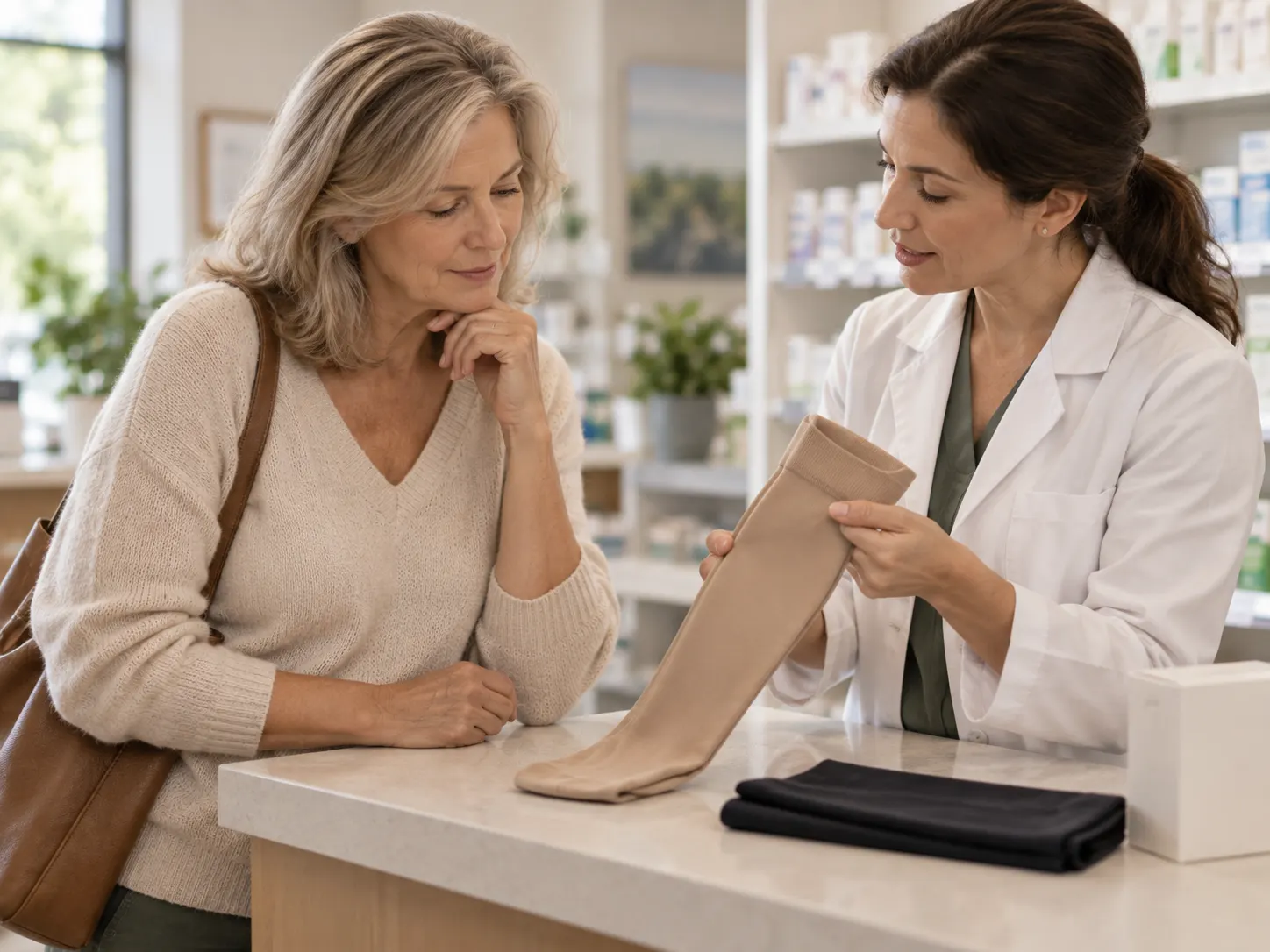
Fit and pressure level matter — a pharmacist or doctor can help you choose the right one.
One easy mix-up worth naming directly: lymphedema (a lymphatic-system swelling condition) and the everyday venous swelling described above share one symptom (swelling) but aren’t the same mechanism, and advice for one doesn’t automatically transfer to the other. If a doctor has told you your swelling is lymphedema specifically, that comes with its own guidance (skin care, a specific approach to elevation and compression, and its own infection warning signs), and it’s worth following that guidance directly rather than generic leg-swelling advice.
The honest summary
A common pattern behind end-of-day leg and ankle swelling after 50 looks like this: gravity, time on your feet or in a chair, and vein valves that don’t work quite as efficiently as they used to. That version responds to ordinary, patient habits, not a purchase. The version that isn’t ordinary (sudden, one-sided, warm, red, tender, or painful) isn’t something to wait out. Knowing which one you’re looking at is the actual skill here, more than any specific remedy.
You now know what’s probably happening, and the specific pattern that would mean it’s something else. The next honest question is what to do if something on a shelf or a screen claims it can speed things up — and whether a claim like that actually deserves your trust.
Was this helpful?
Thanks for letting us know.
Sources
What backs the claims in this piece — see our editorial standards for how we research and source every article.